I was once asked an interesting question by a French teacher in secondary school and it changed my worldview forever. My French teacher asked the class: “How many races are there in the world?” I had never been asked this question before and, by the looks of it, no one in the class had either. After a few minutes of thought-provoking discussion, our French teacher stated: “There are only two races in this world – the human race and the animal race.” After hearing my teacher’s response, the class went silent. I can’t speak for my classmates, but, as for me, that statement, in a matter of seconds, made me see humanity as more connected than I ever had before. So I got thinking. How many different races are there in the world? What defines a race? What defines an ethnicity? Do people have different views on what these two words mean?
I did a recent survey asking people three questions: first, according to them, how many races are there in the world? Second, do you consider Hispanic, African-American and Black British different races, ethnicities or both? And, third, what does ‘mixed race’ mean to them? More than half of the people I asked thought that there were more than five races in the world; three-quarters of people thought that Hispanic, African-American and Black British were different ethnic groups. On the final question, I received a few interesting responses. Some people thought that ‘mixed race’ meant the mixing of two ethnicities; some thought it was the mixing of two races; one person thought it was impossible; and one person stated that “‘mixed race’ may not be the most accurate term to use – ‘mixed ethnicity’ may be more appropriate”. I have, personally, never called myself ‘mixed race’, even though my mother is Peruvian and my father is British. Each side of the family has different features, traditions, languages and skin colours; however, I have always identified myself as being part of one race, but different ethnicities. Often, when we talk about race and ethnicities, we are talking about the biological, historical, traditional and religious differences within humanity, subsequently separating us into different communities.
In my previous post, I spoke about the importance of recognising the cultural and historical differences within humanity in order to start developing more organic intercultural relationships. However, this week I want to highlight a unity within humanity that you may not have realised. In the Bible, the apostle Paul says in 1 Corinthians 12:12, “The human body has many parts, but the many parts make up one whole body.” Paul was using this analogy to describe how humanity is like one body, but has many parts. Just because the ear is not the eye, doesn’t mean the ear isn’t part of the body or that it’s not needed. In the same way, just because we are all different from each other, doesn’t mean that we aren’t part of the human race, and, in fact, we all need each other to function and survive. I could share with you the Oxford dictionary definition of the word ‘race’ and draw upon biological studies to define different race; however, in this piece, I would like us to potentially unlearn something that textbooks have taught us and take you back to the origins of the word ‘race’.
I would like to introduce you to Audrey Smedly, a professor of anthropology and African-American studies and author of Race in North America: A Worldview. Smedly argues this point in her article, ‘Origin of the Idea of Race’:‘Contemporary scholars agree that “race” was a recent invention and that it was essentially a folk idea, not a product of scientific research and discovery. This is not new to anthropologists. Since the 1940s when Ashley Montagu argued against the use of the term “race” in science, a growing number of scholars in many disciplines have declared that the real meaning of race in American society has to do with social realities, quite distinct from physical variations in the human species. I argue that race was institutionalized beginning in the 18th century as a worldview, a set of culturally created attitudes and beliefs about human group differences.” I wanted to quote this extract because I couldn’t have put it better myself; the question I have had since childhood, the sense that I wasn’t mixed race and the statement that my French teacher made were summed up in this first paragraph of the article.
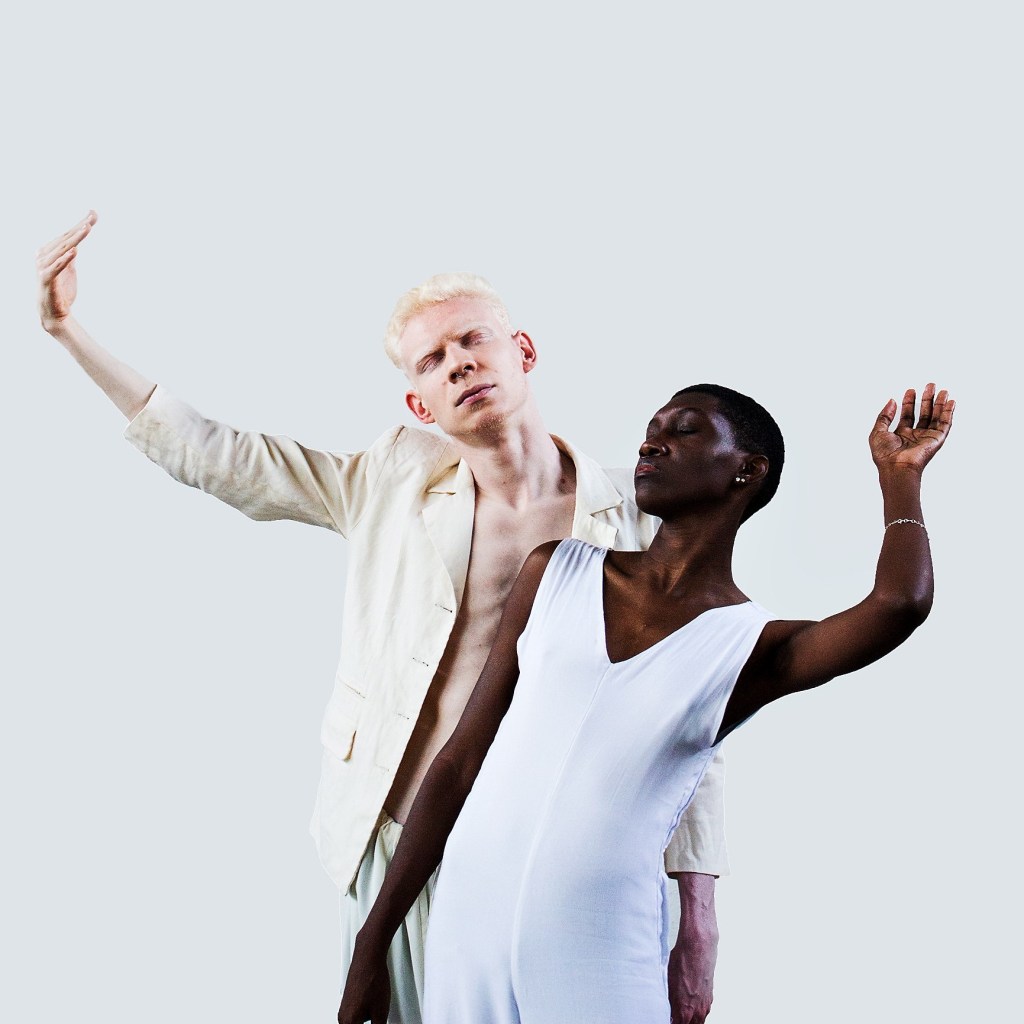
The origins of the word ‘race’ have absolutely nothing to do with biological features. If you believe we all came from one woman and one man – therefore, from the same race – then how and when did we get biologically defined into separate races? Could it be that, over thousands of years, all we have done is just adapt and evolve from the same race? People who live in countries with a colder climate tend to have fairer skin than those in countries with a hotter climate. The indigenous people of many South American countries, who live in the mountains, can survive living in high altitudes without getting short of breath. These are physical adaptations based on the environment people live in. I have seen, the twins of a Peruvian mother and an English father – their son was born with fair skin and blond hair; their daughter was born with thick brown hair and with an olive complexion. There are black people with blond hair; there are white people with type 3 hair. People have mistaken me for Arab, Spanish and even African. I once heard someone say to a woman of mixed ethnicity, “She isn’t black,” simply because she had a lighter complexion. Who decided that there was a scale of blackness or whiteness? Who categorised people by their skin colour? Who decided that there were sub-species within the human race? People have – not science. Institutions, organisations, laws, governments and people throughout history have decided for themselves what ‘race’ means. I have always wondered why the terms ‘mixed race’ or ‘races’ are used so loosely in our society these terms are used by governments, organisations, professionals, TV shows etc. However, when it comes to filling out a legal document, you are asked to tick the box that best describes your ‘ethnicity’, not your race. Could our language, without even realising it, be weakening our fight against systemic racism? Could the misuse of the word ‘race’ be causing an unintentional separation in our society?
In another article, Smedly writes that the word ‘race’ (and its ideology) was birthed from the context of African slavery. Because of the European and American pro-slavery institutions, it became a necessary word to defend the ideology of such institutions. In other words, the word ‘race’ was invented to help Europeans and Americans in the process of legally dehumanising people of colour, subsequently allowing such atrocities as the slave trade, because they were categorising people of colour as a different ‘type’ or ‘kind’ altogether. The word ‘race’ didn’t come from a scientific origin as a word that refers to the grouping of people according to their biological features (as stated by the Cambridge and Oxford dictionaries). It was a word invented for the sole purpose of defending and aiding one of the biggest human trafficking scandals ever seen in human history.
My French teacher didn’t know at the time, but she changed my worldview for ever. I stopped seeing myself as mixed race. How could I call myself mixed when there perhaps were never more than two races to begin with? I believe that the only difference between myself, a white British Hispanic, and my black British boyfriend, is that, over time, our ancestral roots developed differently, but our origins from thousands of years ago were the same.
This is why I love being a Christian. Romans 2:11 says, “For there is no partiality with God,” meaning God has no favourites, God doesn’t see biological differences among His people, God views us all as equally united in the body of Christ. Perhaps this is because God Himself created the first two humans and told them to “be fruitful and multiply”, and science shows us how we have all multiplied from the same kind. Perhaps what unites us is stronger than what divides us. We may be citizens of different countries, who speak different languages, but spiritually as Christians we are all citizens of the same Kingdom. God bless.
Author: Laura M Galarza
Editor: Melissa Bond
 Kingdom Citizen
Leave a comment