Ask yourself the question: ‘who are you?’ Not your occupation, not your country of origin, not who your parents are, but who are you without the labels that society has given you? Many have tried to define exactly what identity is to a person and what identity includes. In my first article, ‘What is identity?’, I wrote about how your country of birth should not define your identity, which includes your beliefs, how you live, what you eat, how you dance or even how you dress. I believe that, first and foremost, my identity comes from God and so, despite physical or cultural differences, the thing that unites me with my fellow brothers and sisters is our unity in one shared Kingdom citizenship. Identity can be somewhat of a confusing topic; in this article, I want to explore this Kingdom unity further, and how you can be grounded in your identity despite your cultural background.
I want to start off by talking about some of the dangers of cultural stereotypes and the expectations that can be placed on people. Perhaps you are also someone of multiple ethnicities, like me, or maybe you have migrated from another country or are native to one country. Sometimes identity can become confusing, especially when you have a mixed ethnicity or dual citizenship or perhaps have just been exposed to different cultures for most of your life. This is certainly a reality for first-generation children, who may have a completely different cultural environment at home compared to school. At school, I received many questions about my identity and where I belonged. It felt as though I was constantly switching cultures. Later I would find the beauty of having both. Sometimes I would feel guilty when I didn’t understand jokes or colloquialisms said to me in Spanish because I felt that, being a Spanish speaker and half-Peruvian, I should understand. Similarly, perhaps you have had experiences when people have made quick presumptions about what you are like as a person based on your cultural heritage. For example, a friend of mine, who has an African-European mix, told me about how she sometimes feels as though she must constantly prove both her cultural identities. People have presumed she cannot cook West-African food or has no rhythm when she dances, and from her European side people has presumed she can’t speak their language. She is called ‘black’ by some and ‘white’ by others, simply because she is mixed. All of this can leave much confusion.
On a more serious note, I believe that the media has had a big influence on cultural stereotyping and misrepresentation of cultural identity, which has given room to things such as ethnic cleansing, racial bias and racial profiling. We have seen this throughout history; for example, when Adolf Hitler wanted to ethnically cleanse Germany, the press released images of what the ‘perfect’ German person and family should look like: blonde hair, blue eyes, fair skin. With these images, Hitler managed to portray and inaccurate image to the whole country of what true Germans looked like, and by this reasoning he killed over 6 million Jews. Although this was the worst ethnic cleansing event in history, the media still has an influence on cultural stereotypes today.
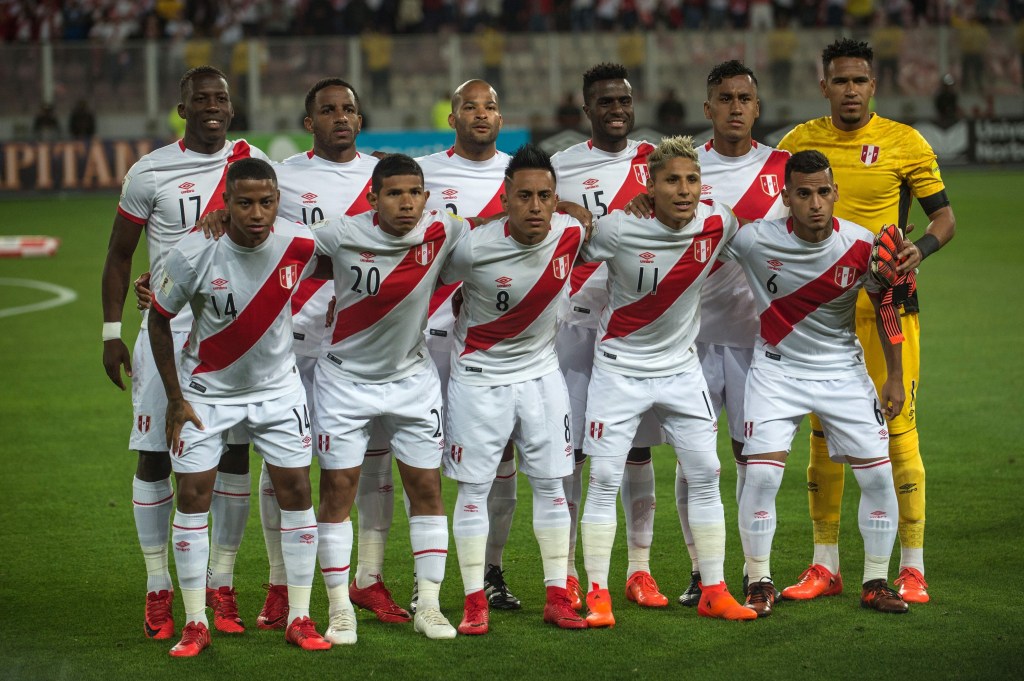
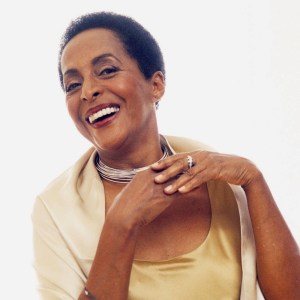
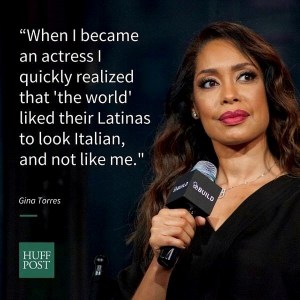
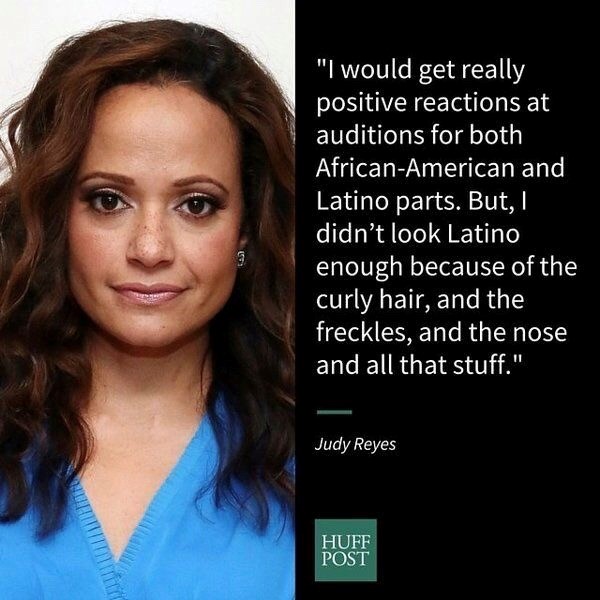
I was listening to a group interview with Afro-Latino celebrities, who were talking about their experiences in the entertainment industry. The actors and actresses spoke about how their darker skin colour would often get them more African-American roles, rather than Latino roles, because producers would say that they were looking for someone of a ‘fairer skin tone’ or with ‘smoother hair’. One of the male Latino actors was even asked whether he could be more expressive in order to look and behave more like a Latino. They also went on to say how people would often be surprised that they spoke Spanish because they didn’t necessarily look like someone who would. How have we let the media dictate someone’s cultural identity? Latin America isn’t just full of Jennifer Lopez-, Salma Hayek- and Marc Anthony-looking people. For example, if you look at the Peruvian football team, more than half of the players are Afro-Peruvian. In addition, some of the very roots of Latin American music come from the African beat and Afro-Latino singers like Celia Cruz or Susana Baca. African people were also brought over as slaves by Spanish conquistadors to many South American countries. Almost half of the Latin American population are black Latinos, yet there are many people who still have no idea that black people live in all parts on the South American continent, and they have done for centuries. I don’t believe the media has given people an accurate representation of who Latin Americans are, as I am sure is the case with other continents and nations. I am aware that, although this is my personal perspective, there are still many inaccurate cultural stereotypes the media has created, especially in terms of appearance and characteristics.
The media has also stereotyped cultural personalities. Not all black and Latina women are loud. Not all British people are quiet, polite and rich. If we think about it, our ancestral roots are so mixed now that it is hard to say who looks or behaves typically British, American, Latino etc. As we migrate across the world, we are taking parts of our culture and identity with us. Consequently, we are seeing many traditions and cultures going beyond their origins and mixing with other cultural traditions. Although in many ways it is necessary that we acknowledge our cultural differences, it is also important that we don’t place certain cultural expectations on people. Even if you are native to one country – for example, just because you are white British, doesn’t mean you are quiet, polite and like to drink tea all the time: I have met many outgoing, expressive and open-minded British people – you shouldn’t have to conform to what the media says about your cultural stereotype.
Who you choose to be is completely your decision. As I explained in my first article, everyone will have their own unique culture, which is dependent on what they have been exposed to. When I stopped trying to fulfil a cultural stereotype and asked myself who I was naturally and genuinely, I became more comfortable with the expression of myself, however mixed it seemed to be, that is who I was. I am not one or the other I am literally, like the body of Christ, many parts but one body! When I started building a real relationship with God, my identity became even more grounded. I stopped confusing myself with cultural expectations, but started to reflect what God expected of me. What identity did God give me and where do I truly come from?
The reason I started writing was because I wanted to start expressing myself as a citizen of God’s Kingdom and not through the way the world may see or label me. In Genesis 1:27, the Bible tells us: ‘So God created human beings in his own image.’ God didn’t create us in the image of the United Kingdom, South Africa, Australia or Germany – you can insert you own country. God made us in His own image. His very identity is in you. I am not talking about God having physical arms and legs, being dark-skinned or light-skinned, bearded or hairless, but rather His very nature is in you. The emotions of happiness, sadness or even anger, God experiences them, too. In addition, God is constantly making decisions, just like we do daily. He is compassionate and kind, and He has a close relationship with us like we do with our family members and loved ones – that’s why we call Him our Father. The Bible also says in Philippians 3:20: ‘We are citizens of heaven, where the Lord Jesus Christ lives.’ Jesus constantly reminded His disciples that He was not from this world: ‘My Kingdom is not an earthly kingdom’ (Matthew 18:36). Jesus knew where He came from and what His identity was. He didn’t come to just be a Nazarene and live like one; Jesus was operating under His Kingdom’s identity. Jesus asked His disciples, “Who do you say I am?” and Peter answered, “You are the Christ, the Son of the living God”. Jesus wasn’t asking for their opinion; he was already secure in His identity. Peter didn’t reply with Jesus’ nationality or occupation, but His Kingdom Identity from God. Before you were ever given a societal label or national citizenship, you belonged to God; you were chosen first by Him to be a Kingdom citizen. Your country does not define you. If you are a Christian, you are first and foremost part of God’s ‘country’. We should be reflecting Kingdom values and characteristics in ourselves and with one another. The Kingdom doesn’t see colour, culture or traditions. Let us not use the mannerisms of our country of birth to define how we should behave and let us be open to share in each other’s cultures. With every culture, there are good and bad aspects. Let’s learn from one another and not just be who our ethnicity says we are. Let us be transformed by the renewing of our minds (Romans 12:2) and start reflecting God’s identity in our unity with one another.
So, who do you say you are? G
So, who do you say you are?
Author: Laura McBride Galarza
Editor: Melissa Bond
 Kingdom Citizen
Leave a comment