Written by Laura McBride Galarza, edited by Melissa Bond
The unknown has always been a matter of interest for humans. European conquistadors had a fascination with exploring the world beyond their own continent, with the aim of discovering and ultimately conquering new land. However, with every new land they discovered, they encountered resident natives living in the area. Out of fear of what the natives could do to them, the conquistadors captured, tortured and fought the natives and, in doing so, seized many territories as their own. They stripped the native indigenous people of their freedom and their basic human rights. Due to their technological advancements, many European conquistadors were able to force their way through and take whole nations as their own. The suppression of one human being by another human being has always stemmed from a place of fear – a fear of ‘what harm could they cause me?’. The only way European conquistadors could oppress and control these indigenous people was to capture them and enslave them, treating them like caged wild animals. As a basic principle of life, you are always a slave to whomever has, and exerts, power over you. Unfortunately, with their modern weaponry, greed to own more land, and fatal diseases the Europeans had brought, Europeans had the ability to kill and capture millions of natives. Fear that enters in a man’s heart has the potential to do great harm.
One of the reasons racism still exists is fear. After the Civil War in America, slavery was abolished, but people’s minds weren’t changed. White Americans still couldn’t stand to see African Americans as their equals, meaning black people continued to face the threat of being shot or lynched, even many years after slavery had been abolished, because of the lack of trust that southern white Americans had in their government. Their racism was rooted in fear – a fear of African Americans living alongside them as equals. Although slavery had been legally terminated, many southern white Americans took matters into their own hands. After all, having spent hundreds of years keeping black people locked up and exercising the freedom to execute and physically assault their slaves at any time, how could they just stop doing something that they had become accustomed to for years? What were they so afraid of that they felt they had to take the matter of life and death into their own hands? During the era of slavery, a lot of psychological damage was caused to both white and black people. It is this damage that continues to affect our minds today.
Some people still react based on these fears today, registering deep psychological fears that sometimes they don’t even understand. In another article, I mentioned how a friend of mine was made to feel embarrassed of her skin colour as a child because the boys didn’t want to touch her shoulders in the conga line at a school disco. The only boy who did put his hands on her shoulders pulled his sleeves over his hands before touching her. What were these children fearing? Children are very quick to learn from their environments or copy others. Children aren’t born racist; racism is a learnt behaviour, though sometimes learnt without even realising it. As adults, I am sure these children would understand what they did was wrong, that it was a (perhaps unintentionally) racist incident. Maybe they would never commit such an offence again. However, the fact that, as children, they acted like this means that there could potentially still be some implicit racism – and implicit fear – in their minds that they are not aware of. This is the psychological damage and trauma our society is dealing with in this twenty-first century. The after effects of slavery are real and we are still experiencing them today. We shouldn’t ignore racism when we see it.
I want to turn now to the very real fears that many ethnic minorities face – the ones they have not been able to verbalise or even understand: fears of being oppressed by a dominant group of people or not being accepted as an equal in society. Only a few weeks ago, a friend of mine was telling me about an incident her son went through. He ended up running home after two white American teenagers jumped out of their car and chased him, one carrying an axe with the intention of causing serious harm. The reason behind the attempted attack was that one of the white teenagers didn’t like the idea of an African-American boy dating his ex-girlfriend. Just like after the Civil War when black men and women were hunted despite slavery having been abolished, there is an underlying threat that young black men and women still deal with today. We must be wary of our implicit biases, we must open our eyes to micro-aggressions and we must realise the very real fear some people live with.
It is through knowledge and asking God to help us renew our minds (Romans 12:2) that we can slowly eradicate explicit and implicit racism. Knowledge of the truth always eradicates fear. Many of my previous articles talk about the truth of common ancestry and how society has tried to divide people in ways that are systematic, not biological. However, I want to help those who may still be living in fear of persecution or opposition. The Bible says in Romans 8:15, ‘You have not received a spirit that makes you fearful slaves. Instead, you received God’s Spirit when he adopted you as his own children.’ What pains me the most are the people who say nothing when witnessing racial attacks, micro-aggressions or implicit racism because they fear the consequences. They fear losing their jobs, they fear not being listened to, they fear violence and, even worse, they fear nothing will be done.
Since the era of slavery, this fear of speaking out has crippled the hearts of many. Of course, back in the eighteenth century, speaking out could have cost you your life; even in past 100 years, when we remember how Dr Martin Luther King and Malcolm X died, the fear of speaking out is still very real. Nelson Mandela was imprisoned; Rosa Parks was arrested – there are many examples of people who died or suffered because they took a stand and lived without fear. They knew they were entitled to their rights and to freedom and they fought to win them. After all, those who make the greatest impact in this life are those who think of making the world a better place for the next generation.
You may have a fear right now that is controlling what you think you can achieve in your life. Free yourself from it; don’t let the fears of your parents be your fears, too. Take a stand for the next generation, so they are able to live in a better world than yours! You are not a slave to fear!
Quote from Sojourner Truth, an American abolitionist and women’s right activist, and devout Christian 1797–1883:
‘Children, who made your skin white? Was it not God? Who made mine black? Was it not the same God? Am I to blame, therefore, because my skin is black? … Does not God love colored children as well as white children? And did not the same Savior die to save the one as well as the other?’
– Taken from her speech in 1863
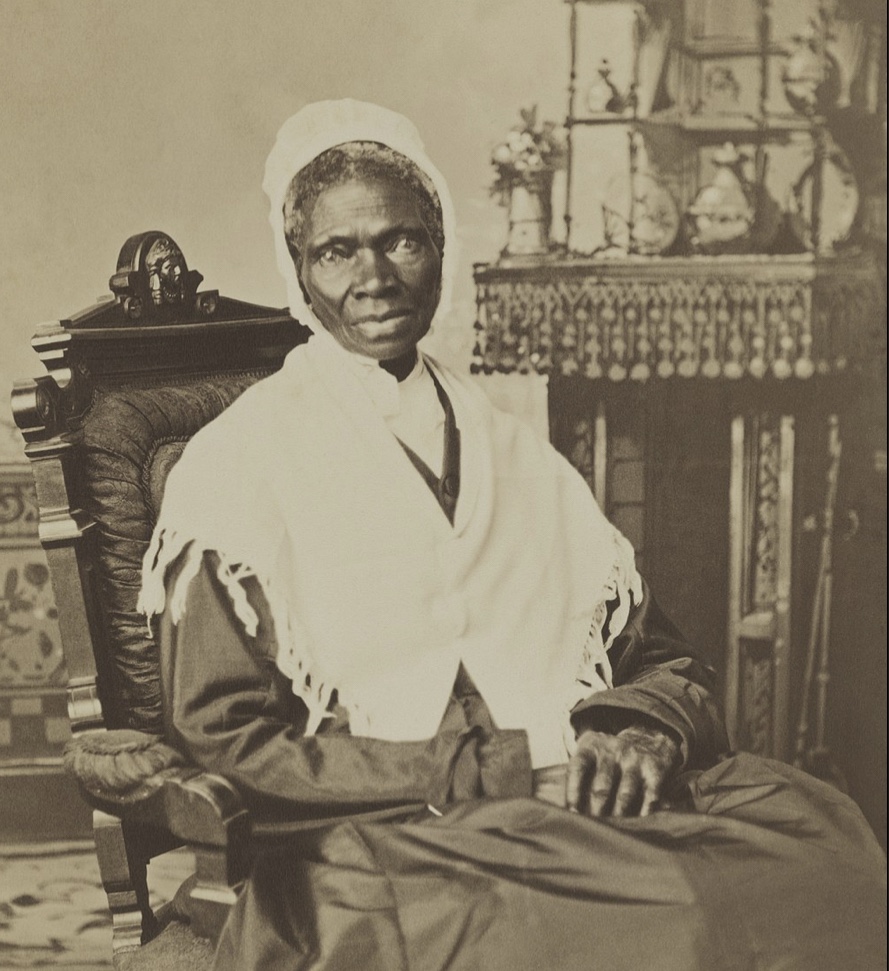
Sojourner Truth
 Kingdom Citizen
Leave a comment