Ethnicity reflects the story of human migration, beginning with the journey out of Africa and spreading across the globe. It shows how one culture evolved into the next. It also demonstrates how humans physically adapted to different climates. This evolution highlights the shared ancestral roots that connect everyone walking on the earth today. However, whilst human migration once followed a natural progression, the pursuit of wealth, land and power introduced a more destructive dynamic. From biblical times till today, wars have been fought to draw boundaries and shape the world map.
Ethnicity not only reflects the migration of our ancestors but also the diverse experiences they encountered along their journeys across the world. It reveals how these experiences shaped their interactions with different cultures, especially highlighting the enduring impact of colonial interactions. Whether it was Africans forcibly taken to the Americas, Jewish people exiled and spread worldwide, or the indigenous people of South America and Australasia displaced and enslaved by colonisers in their own land. These events left a lasting mark on human history. They were driven by the ignorance of scientists, aristocracy, politicians, and leaders. These individuals justified colonisation and oppression by deeming the native populations inferior to themselves. In the pursuit of territorial dominion, many endured oppression for extended periods before eventually gaining their freedom.Though less overt today, the psychological effects of racism, whether implicit or explicit, from past oppression still remain.
These historical events have shaped our thinking. Psychology shows that once the mind is conditioned, it takes time to change that perspective. Cross and Naidoo (2012) argue that colonial ideologies and discriminatory practices have deeply embedded a ‘racist habitus’ within societies. This means that racist attitudes and systemic structures have become ingrained in our communities, influencing the way we think and operate. These biases have shaped societal norms, continuing to affect interactions and institutional frameworks today. These historical influences subtly persist in modern thinking, making it challenging to break free from long-held beliefs. The narrative established by colonisers has had an effect in conditioning societal mindsets. Therefore, it will require deliberate, intentional efforts to challenge and dismantle these deeply entrenched perspectives.
I have always thought to my self, how did Europeans gain superiority over many nations? How did they develop the systems, weaponry and knowledge that enabled them to explore and conquer the world? While I don’t have all the answers, one thing is clear. Throughout history, the strongest, whether through physical power or intellect, often prevail. The slave trade and colonisation didn’t happen because the native peoples of the land welcomed invaders, they fought fiercely to defend their lands. However, as with every war, one side will ultimately have to surrender. And therefore, it is the victorious whose voice it amplified, giving them the power to shape history by controlling the narrative.
When looking closer at how some of these narratives have been shaped, a particularly disturbing story caught my attention. The concept of ‘human zoos’ emerged during colonial exhibitions, such as the 1886 Colonial and Indian Exhibition in London, where Indigenous people were displayed as attractions for the public (Channel 4, 2024). African individuals, including Mbuti pygmies, were placed in artificial villages and forced to perform tasks for public entertainment. Ota Benga, taken from Congo, became infamous for his exploitation in colonial exhibitions. Captured by American explorer Samuel P. Verner, he was first displayed at the 1904 St. Louis World’s Fair and later traveled through Europe. His treatment as a ‘savage’ for public entertainment continued when he was showcased at the Bronx Zoo in 1906, reinforcing white superiority and the dehumanising practices of colonial exhibitions (The Guardian, 2015). Though civil rights movements challenged these systems, colonisation has already left a lasting mark. While indigenous people are no longer placed in human zoos, this practice has left lasting harm. It has shaped society’s perspective of people who were different from them.
A modern example of this is six-year-old Ruby Bridges. In 1960, she became the first Black child to integrate into an ‘only-whites’ school in New Orleans. This occurred during the height of the Civil Rights Movement. She passed the exams needed to enter the school, and on her first day, she was escorted by U.S. marshals in anticipation of the mobs that awaited her. Enduring the verbal abuse from mobs of haters, she walked into the school for the first time. In response, the same haters withdrew their children from the school that day, and teachers resigned, leaving Ruby the only student. Ruby’s courage and resilience in the face of such racism played a pivotal role in the fight for educational equality in America. It raises a significant question. Would their attitude toward African Americans have been the same without the narrative ingrained just 60 years prior?
I highlight these two cases as a representation of a societal attitude that has been so deeply fabricated over time. Ruby Bridges, now aged 70, lives in the same country as many White Americans. They may not be overtly or even implicitly racist. However, we must acknowledge that her ethnicity, and that of her three children, will forever carry a different history than that of her White American counterparts.
While we live in increasingly multicultural communities, it is important to recognise and acknowledge the diverse historical experiences we all carry, whether we’re first or fourth generation. Some may trace their ancestry to the African slave trade, or to Latin America’s history, where colonisers overthrew empires like the Inca empire, subjecting people to torture and forced labor. Others may have ancestors who suffered under the brutality of Adolf Hitler, who exterminated six million Jews. Every ethnicity carries a unique history.
In light of the Great Commission, the apostles were told to spread the gospel. They spread the Good News of Jesus Christ peacefully, never resorting to force or brutal authority. Many died as martyrs for their faith. As 1 Peter 3:15 reminds us, “…if someone asks about your hope as a believer, always be ready to explain it. But do this in a gentle and respectful way.” Although God has clearly outlined His desires for how we should live and act, human greed has often distorted His original intent, leading to devastating consequences like the destruction and harmful treatment of others based on physical appearance. God has provided us with a blueprint for life. To avoid falling into harmful conditioning, we must strive to align our perspectives with His. We should see the world through His eyes to end such conflict and prevent the repetition of these atrocities today.
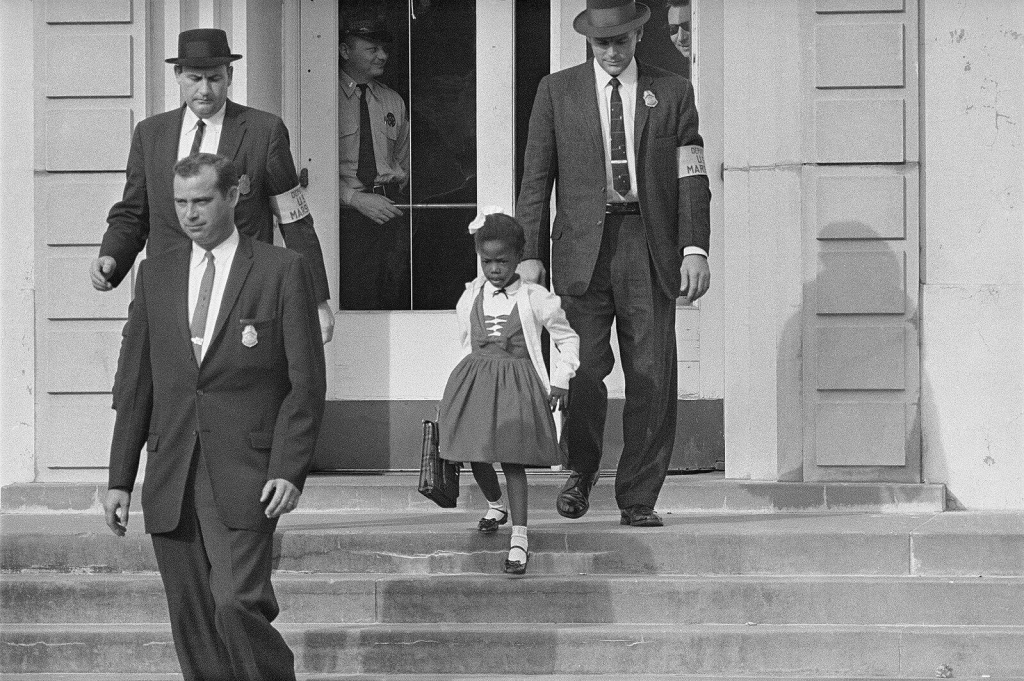
Six-year-old Ruby Bridges, three-quarter length portrait, standing, facing front., 1960. Photograph. https://www.loc.gov/item/00651757/.
References
Britain’s Human Zoos, Channel 4 Available at: https://www.youtube.com/watch?v=0ZQWgeETMqQ (Accessed: 1 December 2024)
Cross, M. and Naidoo, D. (2012) ‘Race, Diversity Pedagogy: Mediated Learning Experience for Transforming Racist Habitus and Predispositions’, Review of Education, Pedagogy, and Cultural Studies, 34(5), pp. 227–244. Available at: https://www.tandfonline.com/doi/full/10.1080/10714413.2012.735558#d1e134
Dawson, Shay. “Ruby Bridges.” National Women’s History Museum. National Women’s History Museum, 2024. (Accessed: 1 December 2024)
Tabard, J. (2015,). The man who was caged in a zoo. The Guardian 3 June. Available at: https://www.theguardian.com/world/2015/jun/03/the-man-who-was-caged-in-a-zoo (Accessed: 1 December 2024)
 Kingdom Citizen
Leave a comment